Tick Ecology
Ticks are small arachnids (related to spiders) that feed on the blood of mammals, birds, and sometimes reptiles. They are not insects. In the UK, ticks are the most important vectors of disease affecting both humans and animals.
Life Cycle
Ticks go through four life stages: egg → larva → nymph → adult. A nymph is the juvenile stage between larva and adult, not a baby adult. After hatching, ticks need a blood meal at each stage to develop to the next. This takes about 3 years on average in the UK, though it can be longer where hosts are scarce, because a tick cannot move to the next stage until it has fed.
- Larvae: tiny (less than 1 mm), with 6 legs. Usually feed on small mammals and birds.
- Nymphs: about 1–2 mm, with 8 legs. Responsible for most human disease-transmitting bites because they are small and hard to notice.
- Adults: 3–4 mm unfed, up to 11 mm when engorged. Females need a large blood meal before laying eggs.
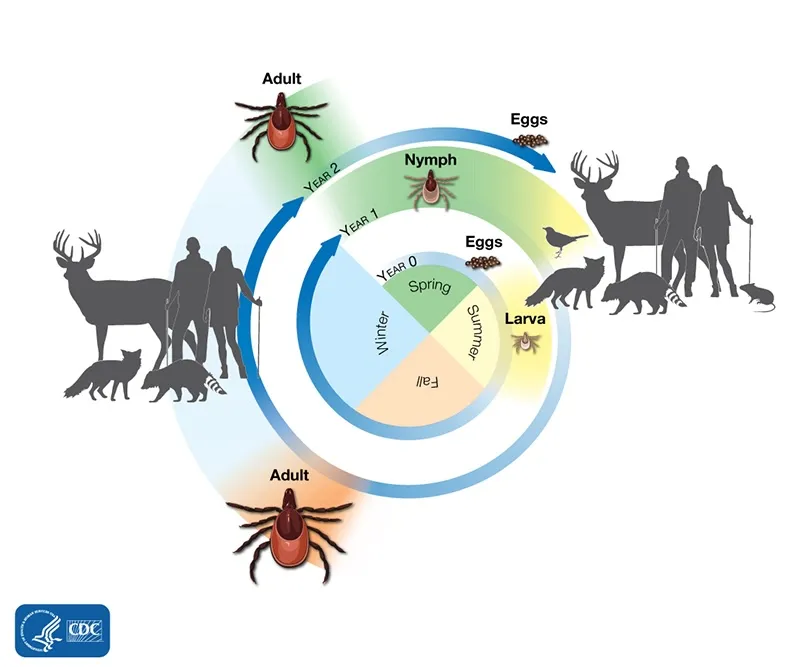
Example tick life cycle illustration. Timing and host use can vary between species. Attribution: CDC tick life cycle guidance.
Where Are Ticks Found?
Ticks wait on vegetation (grass, bracken, leaf litter, bushes) with their front legs outstretched, a behaviour called questing. When a tasty meal comes by, be it a mouse, bird, or you, they grab on for a ride and a bite to eat.
Common tick habitats in the UK include:
- Woodland edges and clearings
- Long grass and bracken
- Moorland and heathland
- Parks and gardens (especially near deer or hedgehog activity)
What Do Ticks Feed On?
Almost anything that has blood. In the UK specifically, that means deer, sheep, cattle, dogs, hedgehogs, mice, voles, squirrels, ground-feeding and fledgling birds, and...us. Larvae and nymphs take their meals from much smaller hosts, which are easier for them to find and bite, while adults can feed on larger mammals as well.
While birds are easy to overlook as a tick host, they are one of the primary means by which ticks, and the pathogens they carry, travel. While a mouse might carry a tick a hundred metres, a bird can carry one across a county, or even across a country during migration.
Ticks on birds attach where the bird cannot preen and where the skin is thin, so the head is a target, especially around the eyes, the bill base, and near their ears.
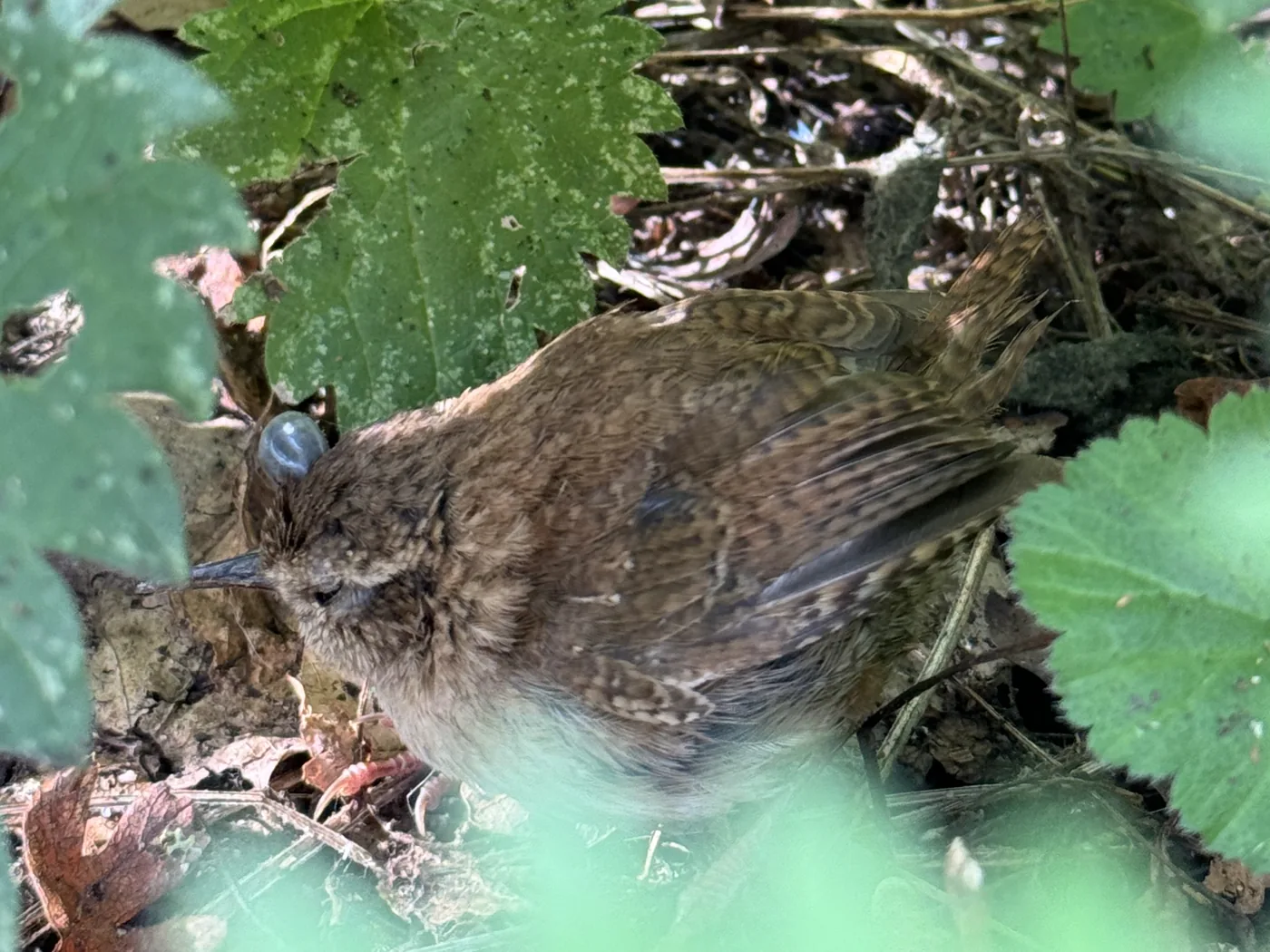
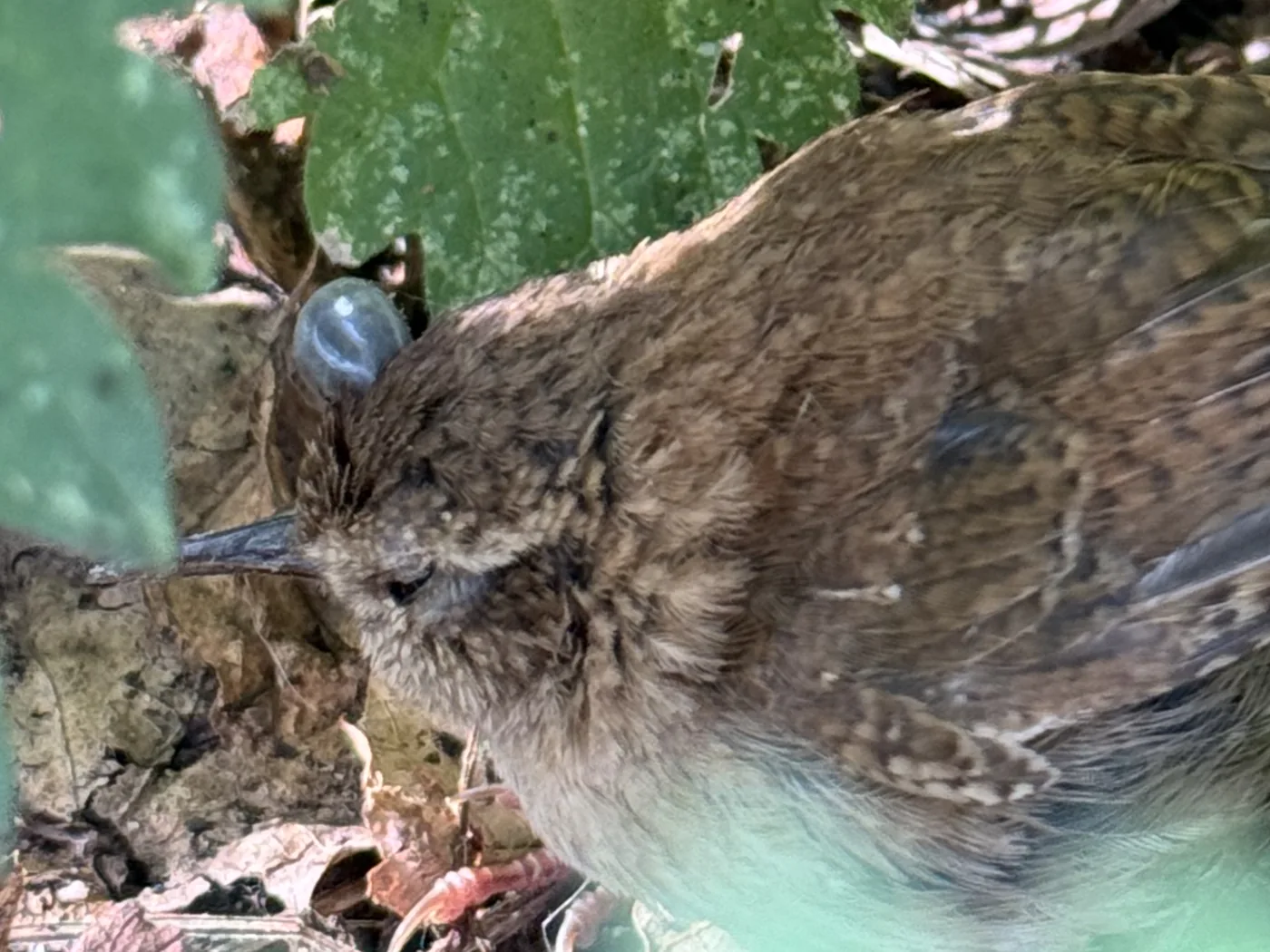
The pale grey bead beside this wren's eye is a tick that has fed to full size, or in other words is engorged. Engorged ticks look nothing like the flat, tiny vector people usually picture. A single tick on an otherwise healthy adult bird is a normal observation and not a cause for alarm, as we know ticks are a routine part of the lives of wild birds and vice versa.
When Are Ticks Active?
Ticks are most active from March to October, with peaks in spring and early autumn. They prefer damp air, and very dry conditions can suppress population numbers and questing behaviour.
You will often see a temperature threshold quoted for tick activity (we do this as well). The usual figure is a daily maximum of about 7 °C for questing to get going, but this absolutely does not mean questing doesn't occur below this temperature. In a study of Ixodes ricinus from Scotland, Wales and southern England, 13 to 17% of nymphs were already questing at 6 °C and has been recorded down to 4 °C. It follows that ticks used to cooler places quest at cooler temperatures. In fact, the UKHSA does not publish a threshold at all: it says activity continues through the winter at a reduced level and that bites can happen at any time of year.
That is why this site uses 4 °C as its cut-off for saying ticks may be questing, a cautious figure. We would rather warn you that there may be ticks when there are none than falsely assure you there say there will be none.
Additionally, mild winters can extend the season, and climate change is contributing to ticks being found at higher altitudes and more northerly locations than previously recorded. Read more about how climate can affect ticks at Planetary Health page
Sources: Gilbert, Aungier & Tomkins (2014), Ecology and Evolution 4(7):1186–1198; UKHSA Be Tick Aware toolkit.