Hedgehog Tick
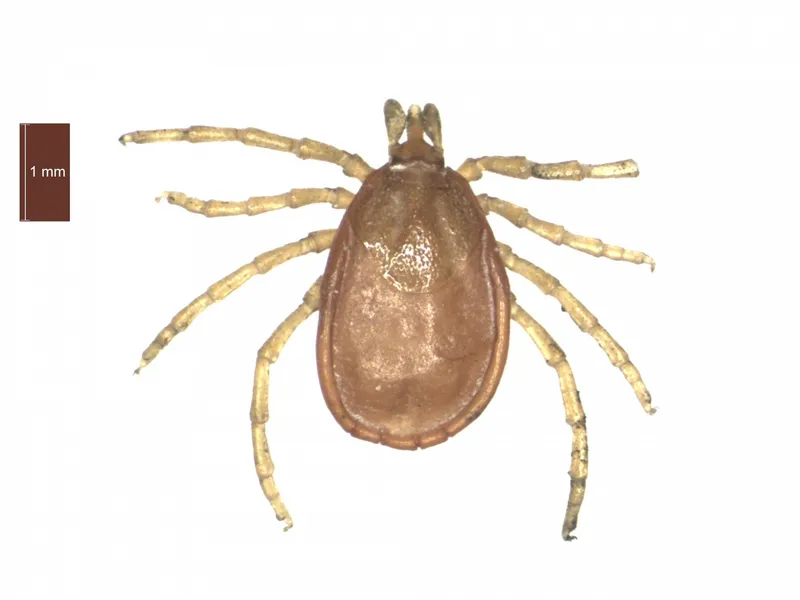
Adult Ixodes hexagonus female (source: ESCCAP UK).
Overview
Ixodes hexagonus is the second most commonly recorded tick from human bites in the UK, after Ixodes ricinus. Don't let the name “hedgehog tick” fool you; this species feeds on a wide range of hosts including foxes, cats, dogs, and occasionally humans, especially in gardens.
It is a “nidicolous” tick, meaning it lives in or near the nests and burrows of its hosts rather than questing on open vegetation.
Identification
- Adults: ~3 mm when unfed; similar in size to I. ricinus but with a more rounded body and distinctive hexagonal mouthparts when viewed under magnification.
- Colour: Pale yellowish-brown; engorged females are grey.
- Distinguishing I. hexagonus from I. ricinus with the naked eye can be tricky! If you are unsure, you can send the tick to UKHSA for identification.
Distribution in the UK
Widespread across the UK wherever hosts are present. Because it lives in nests rather than questing in open vegetation, you are most likely to encounter it in gardens, outbuildings, hedgerows, and areas visited by hedgehogs and/or foxes.
UK Occurrence Records
Loading map…
Diseases & Public Health
I. hexagonus can carry some of the same pathogens as I. ricinus, though typically at somewhat lower rates:
- Lyme disease (Borrelia burgdorferi s.l.) — has been detected in this species. Because it bites people less frequently and transmission requires prolonged attachment, the overall risk is lower than from I. ricinus, but it is not zero.
- Borrelia miyamotoi — detected in Ixodes ticks in the UK.
Prevention & Advice
- Use tick prevention treatments on cats and dogs: ask your vet for advice.
- Wear gloves when handling hedgehogs or working around animal nests.
- Check pets regularly, especially around the ears, head, and neck.