Lyme Disease

What is Lyme Disease?
Lyme disease is the most common tick-borne infection in the UK. It is caused by bacteria in the Borrelia burgdorferi group, which are transmitted through the bite of an infected Ixodes ricinus tick. UKHSA estimates there are 1,000–2,000+ cases per year in England and Wales, though the true number may be higher because many cases go unreported due to mild symptoms and lack of awareness.
With early treatment, most people make a full recovery. Untreated, Lyme disease can cause serious long-term healthproblems.
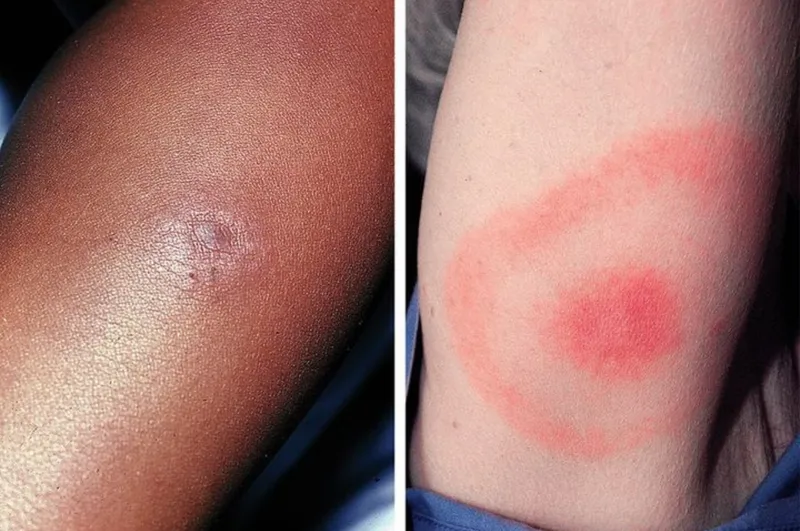
Erythema migrans can look different on different skin tones (source: Lyme Disease UK).
How You Get It
Lyme disease is transmitted by the bite of an infected tick. In the UK, the main vector is Ixodes ricinus. The bacteria live in the tick’s gut and typically take 24–48 hours of attachment to pass into the human bloodstream, which is why prompt removal is so important. Earlier transmission is possible, though, so remove any tick as soon as you find it and watch for symptoms whatever the timing!
Signs & Symptoms
Early stage (days to weeks after a bite)
- Erythema migrans (“bullseye” rash): a circular red rash that often (but not always) develops a pale centre as it expands. It appears at the site of the bite 3–30 days after the tick has fed. Not everyone gets the rash (estimates vary from 50–80% of cases).
- Flu-like symptoms: tiredness, headache, muscle and joint aches, fever, swollen glands and lymph nodes.
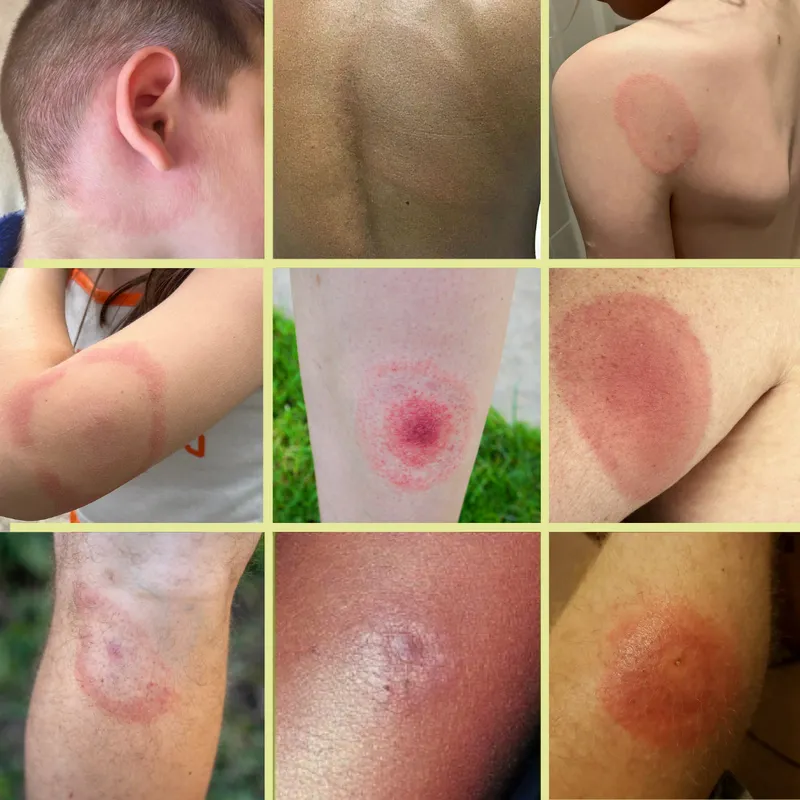
Erythema migrans rash appearance can vary (source: Lyme Disease UK).
Later stage (weeks to months, if untreated)
- Spreading rashes on other parts of the body.
- Joint pain and swelling (Lyme arthritis), especially in the knees.
- Neurological problems — facial palsy (drooping of one side of the face), numbness or tingling, meningitis.
- Heart problems (rare) — palpitations, dizziness.
- Ongoing fatigue and cognitive difficulties.
Diagnosis
If you have an erythema migrans rash, your GP can usually diagnose Lyme disease based on the rash alone due to its distinctive characteristics. Treatment should start immediately.
If there is no rash but Lyme disease is still suspected, a blood test can check for antibodies to the bacteria. These can take several weeks to develop, so an early test may be negative even if you are infected. Your GP may repeat the test later or refer you.
Treatment
Lyme disease is treated with antibiotics. A 2–4 week course of doxycycline or amoxicillin is the standard first-line treatment. Most people recover fully, especially when treated early.
Some people experience lingering symptoms (fatigue, aches) after treatment. The NHS recommends follow-up with your GP if symptoms persist. More complex cases may be referred to a specialist.
When to See Your GP
- You develop a circular or expanding rash after a tick bite (or after outdoor activities, even if you didn’t notice a bite).
- You feel unwell with flu-like symptoms in the weeks after a tick bite.
- You develop joint pain, facial weakness, or neurological symptoms.
Tell your GP about the tick bite. Early treatment is simple and effective.
Prevention
- Follow our bite prevention guide when in tick habitats.
- Remove ticks quickly. The longer a tick is attached, the greater the risk.
- There is currently no vaccine for Lyme disease available in the UK.