How to Remove a Tick
Found a tick on yourself, a child, or a pet? Don’t panic! Removing it quickly and correctly can reduce the chance of infection. The NHS and UKHSA recommend the method below:
Step-by-Step Removal
- Use a fine-tipped tick removal tool or tweezers. Grasp the tick as close to the skin as possible. Do not squeeze the body, and do not use your fingers.
- If using fine-tipped tweezers, pull steadily upward with even pressure. Don’t twist or jerk, as that increases the chance leaving infectious mouthparts in the skin.
- With a hooked or “twister” style tool: slide the hook under the tick, lift very slightly, and rotate as the manufacturer directs, usually two or three turns until the tick lets go. These tools are designed to twist, so follow their instructions rather than the tweezer method above.
- Clean the bite area with antiseptic (ideally) or soap and water.
- Clean up and dispose of the tick. Don’t crush it — stick it to a piece of tape and fold the tape over, or seal it in a bag before binning it. Better still, send it to UKHSA via the Tick Surveillance Scheme to help with research and records.
If Mouthparts Break Off
Sometimes, even with the correct technique, tick’s mouthparts might remain in the skin. If you can easily remove them with clean tweezers, do so. If not, leave them alone; they usually work themselves out naturally. Keep the area clean and watch for signs of infection. If worried, contact your GP.

What Should You Watch For After a Bite?
Most tick bites do not lead to illness, but it’s important to monitor the bite site, the area around it, and your general health for up to 4 weeks afterwards.
- Erythema migrans is a circular red rash that often (but not always) expands outward from the bite in the classic “bullseye” pattern. This is the most recognisable early sign of Lyme disease. It can appear 3–30 days after a bite.
- Flu-like symptoms: tiredness, muscle aches, headache, fever, or swollen glands.
- Other rashes, joint pain, or unusual symptoms: can indicate Lyme disease or other tick-borne infections.
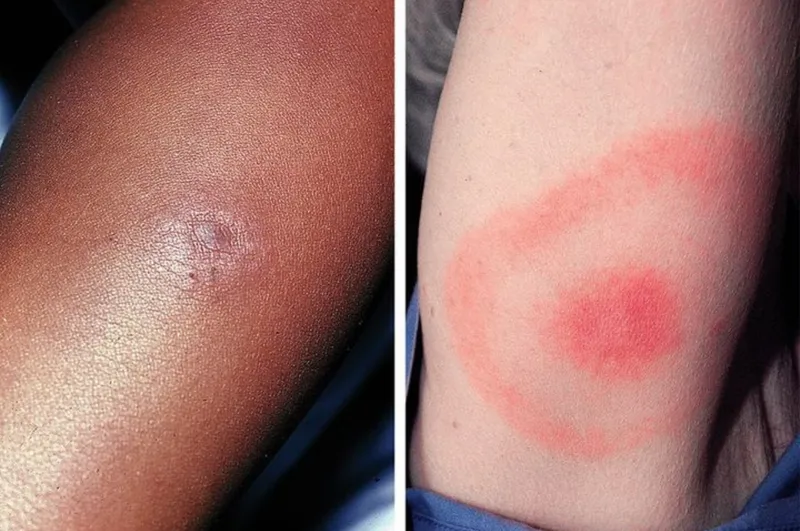
Erythema migrans can look different on different skin tones (source: Lyme Disease UK).
See your GP promptly if you develop any of these symptoms and make sure to mention the tick bite. Early treatment with antibiotics is highly effective for Lyme disease. NHS guidance is NOT to wait for a rash before seeking advice if you feel unwell after a bite, as it does not appear in ever case.
Removing Ticks from Pets
The same principles apply: use a pet tick removal tool or fine-tipped tweezers. Grasp the tick close to the skin, keep steady pressure, and follow the instructions for the tool you are using rather than squeezing or yanking the tick.
Dogs are at risk of canine babesiosis in some parts of the UK. Speak to your vet about preventive tick treatments.