Ornate Cow Tick / Marsh Tick
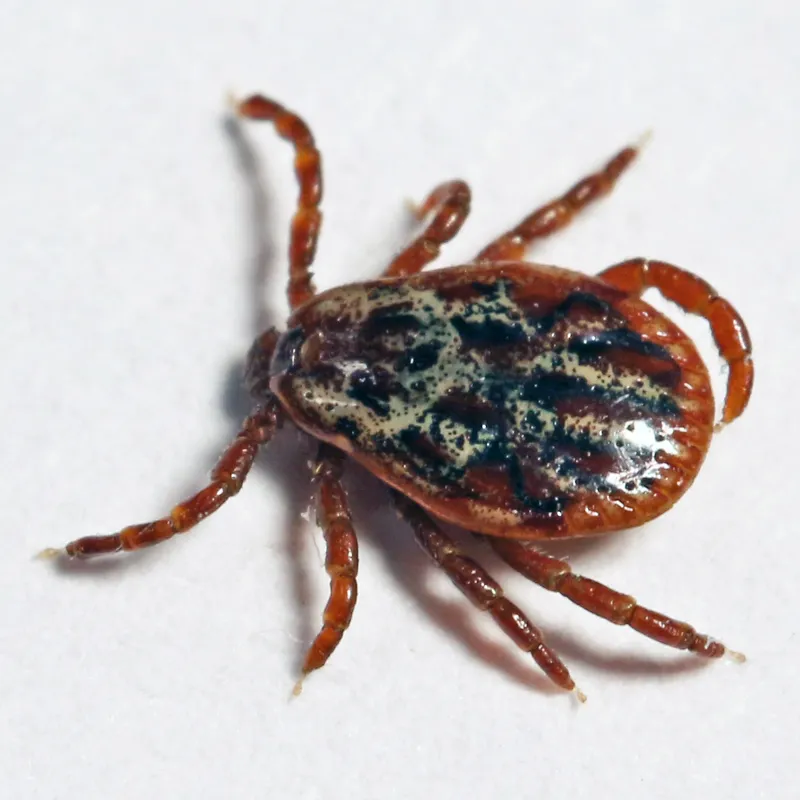
Adult Dermacentor reticulatus showing the distinctive ornate patterning on the scutum (source: Wikimedia Commons).
Overview
Dermacentor reticulatus is a large, distinctively patterned tick found in localised areas of the UK. It mainly bites livestock, dogs, and wildlife, and is the primary vector for canine babesiosis (Babesia canis) in Europe. It does not commonly bite humans, but it can.
Identification
- Adults: ~4–5 mm when unfed. Noticeably larger than species such as Ixodes ricinus. The scutum has a striking marbled or ornate cream-and-brown pattern, making this species easier to identify than most UK ticks.
- Engorged females: Can swell up to ~15 mm.
- Nymphs & larvae: Much smaller; rarely encountered on people or pets because immature stages tend to feed on small mammals.
Distribution in the UK
This species has a patchy, localised distribution. Historically it was restricted to parts of south-west Wales, Devon, and Essex, but records have expanded in recent years. It favours rough grassland, marshes, sand dunes, and coastal pasture.
Unlike Ixodes ricinus, adults of this species can be active in cooler months (autumn and late winter/early spring), which extends the risk period for dogs.
UK Occurrence Records
Loading map…
Diseases & Public Health
- Canine babesiosis (Babesia canis), the most significant concern. Cases in UK dogs were first confirmed in Essex in 2015/16 and have since been reported from other areas. This is a serious, potentially fatal disease in dogs.
- Rickettsial infections — Rickettsia species have been detected in this tick across Europe.
Prevention & Advice
- Dog owners: Talk to your vet about tick preventive treatments, especially if you walk in known D. reticulatus areas.
- Check dogs thoroughly after walks in grassland or coastal habitats.
- Remove attached ticks promptly.
- If your dog develops fever, lethargy, dark urine, or pale gums after a tick bite, seek veterinary care urgently: these can be signs of babesiosis.