Anaplasmosis
What exactly is Anaplasmosis?
Anaplasmosis (sometimes called human granulocytic anaplasmosis, or HGA) is a bacterial infection spread by tick bites. The bacterium Anaplasma phagocytophilum infects white blood cells. In Europe, it is transmitted by Ixodes ricinus.
Human cases in the UK are very rare, but the pathogen circulates widely in wildlife and livestock, particularly sheep and cattle, where it causes “tick-borne fever.”
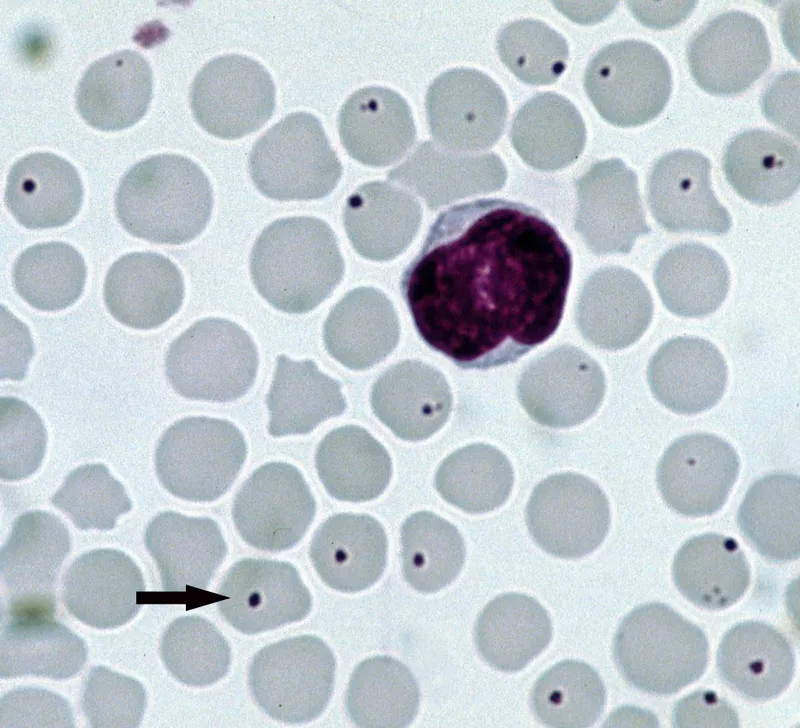
Anaplasma bacteria in white blood cells (source: Wikimedia Commons).
How Do You Get It?
Through the bite of an infected Ixodes ricinus tick. Reservoir hosts include deer, sheep, cattle, and small mammals. You cannot catch it from another person.
Signs & Symptoms
Symptoms typically appear 1–2 weeks after an infected tick bite:
- High fever, chills
- Severe headache
- Muscle aches and fatigue
- Nausea, vomiting, diarrhoea (sometimes)
Most cases are mild and self-limiting. Severe illness is more common in older adults or people with weakened immune systems. Fatal cases are extremely rare.
Diagnosis & Treatment
Diagnosis requires a blood test (doctors look for antibodies to the bacterium or the bacteria themselves in white blood cells). Treatment with doxycycline antibiotics is usually effective.
Because symptoms overlap with many other illnesses, tell your GP about any recent tick bite so they can consider tick-borne infections.
In Animals
A. phagocytophilum is well known in veterinary medicine as the cause of tick-borne fever in sheep and cattle, and granulocytic anaplasmosis in dogs and horses. It is widespread in UK livestock populations. Farmers and vets should discuss tick management strategies with animal health advisors.
Prevention
- Follow our bite prevention guide.
- Remove ticks promptly.
- There is no human vaccine for anaplasmosis.