Coastal Red Tick / Red Sheep Tick
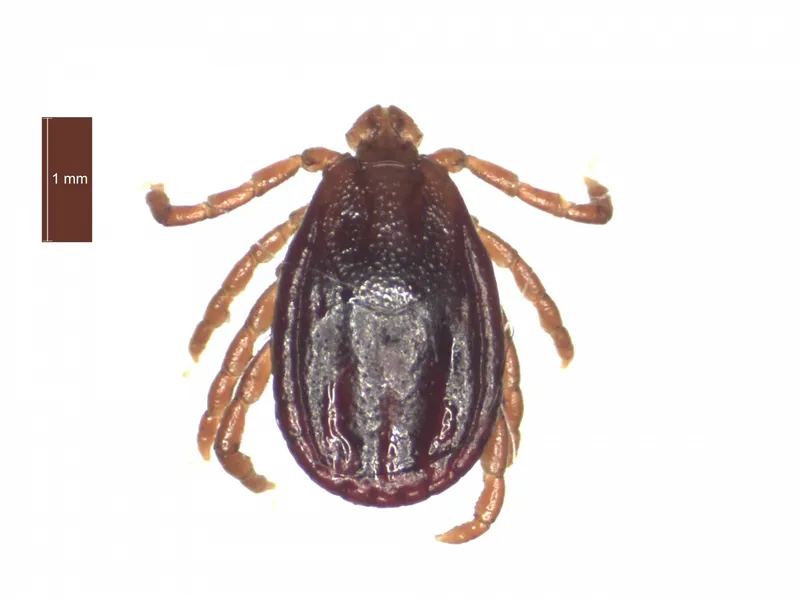
Adult Haemaphysalis punctata female, dorsal view (source: ESCCAP UK).
Overview
Haemaphysalis punctata is a relatively uncommon tick in the UK, found mainly in coastal and lowland grazing areas. It primarily feeds on livestock (cattle, sheep, horses) and wildlife, but can occasionally bite humans.
Identification
- Adults: ~2.5–3.5 mm when unfed. Smaller and more compact than Ixodes ricinus. Reddish-brown with a short, broad mouthpart structure.
- The genus Haemaphysalis has distinctive lateral extensions (called palpal projections) visible under a hand lens.
- Accurate identification usually requires microscopy or expert confirmation, so consider sending the tick to UKHSA.
Distribution in the UK
Localised and patchy. Most records come from south-east England (Kent, Essex, Suffolk) and parts of coastal Wales. It is associated with salt marshes, coastal grassland, and rough pasture grazed by livestock or deer.
This species has a limited range compared to I. ricinus, but monitoring continues as climate change could influence its habitat suitability.
UK Occurrence Records
Loading map…
Diseases & Public Health
- Rickettsial infections — Rickettsia species have been detected in H. punctata in the UK. The clinical significance is uncertain, but tick-borne rickettsiae can cause febrile illness.
- Elsewhere, this species has been linked to Crimean–Congo haemorrhagic fever virus (CCHFV).This disease has not been recorded in the UK.
Prevention & Advice
- Standard tick bite prevention applies when walking in coastal grassland or pasture.
- Livestock keepers: check animals regularly and discuss tick management with your vet.
- If you find an unusual tick, consider reporting or sending it for identification. Records of uncommon species help researchers track distribution changes!