Rice Field Mosquito
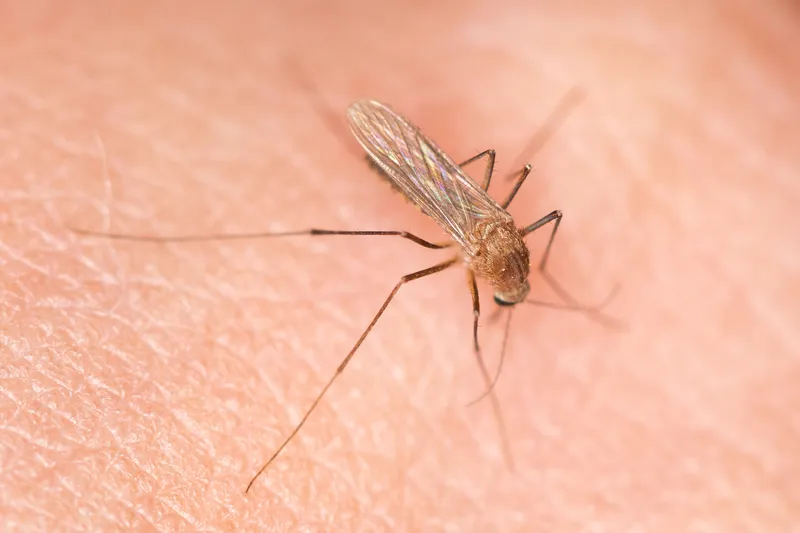
Culex modestus adult (photo source: iNaturalist Open Data).
Overview
Culex modestus is a wetland-associated mosquito with increasing surveillance importance in England and across Europe.
It is closely monitored because it is considered a bridge vector that can feed on both birds and mammals, including people, in West Nile virus ecology.
UK Relevance
Current UK mosquito-borne disease risk remains low for the general public. Even so, Cx. modestus is important because it is linked to West Nile virus transmission in Europe and is established in parts of England.
Historically, the species was recorded on Hayling Island in the 1940s and then thought absent. It was rediscovered in North Kent in 2010, and surveillance has since reported records in counties including Kent, Essex, Cambridgeshire, Suffolk, Hampshire, and West Sussex.
Identification
- Typically a brown mosquito that can be hard to separate from other Culex species without specialist keys.
- Often linked to marshes, reedbeds, floodplains, and other wet or semi-wet habitats.
- Records are useful even when identification stays at genus or group level.
Habitat and Season
Look for this species in wetland landscapes, especially drainage ditches and marsh habitats with shallow, warm water and dense vegetation. UK field studies describe preferred larval habitats as narrow ditches with abundant marginal, submerged, and floating plants.
In England, adult numbers are usually highest in mid-to-late July, while larval abundance can peak later in the summer (often late August to early September).
Diseases
The strongest evidence links Cx. modestus to West Nile Virus. UKHSA describes it as an important, principal bridge vector in Europe, with documented involvement in outbreaks affecting humans and horses. Its feeding behaviour on both birds and mammals (including people) is the key reason it matters in transmission ecology.
There is also growing evidence relevant to Usutu Virus in the UK context. UK risk assessments report Usutu-positive Cx. modestus mosquito pools in the Thames estuary and Essex, and recent published work has been used to support vector-competence concerns in UK preparedness planning.
What to Look For
If you are out near wetlands or riverside habitats, note the location, take a clear photograph, and record the habitat type.
If you think you have found an unusual mosquito, you can use our Citizen Science page and GOV.UK mosquito reporting guidance.
References & Further Reading
- GOV.UK — Surveillance for Culex modestus
- ECDC — Culex modestus current known distribution (October 2023)
- Vaux et al. (2024) — An update on the ecology, seasonality and distribution of Culex modestus in England
- Pilgrim et al. (2024) — UK mosquitoes are competent to transmit Usutu virus at native temperatures