Usutu Virus
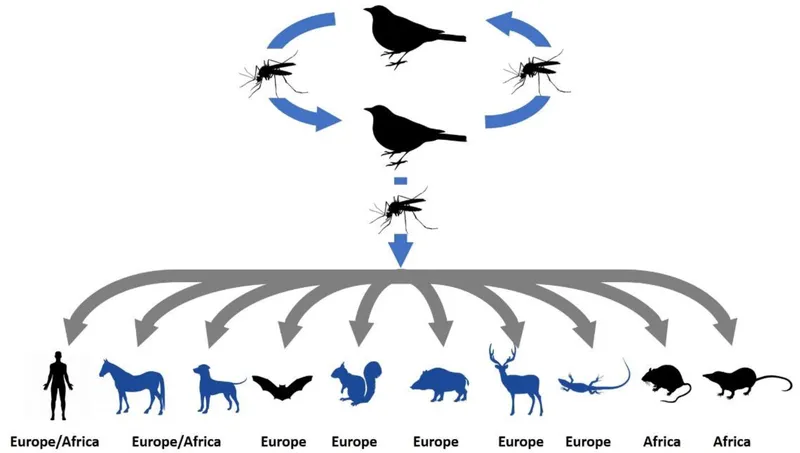
Usutu virus transmission cycle illustration (source: MDPI Pathogens).
UK Status
Usutu virus is considered a low risk to the general UK public at present, and no human cases have been reported in the UK to date. However, UKHSA and partners continue to monitor it closely because the virus is established in parts of Europe and is now detected in UK birds and mosquitoes.
UK Context
Usutu detections in blackbirds in Scotland add to the broader UK pattern already seen in south-east England. This supports ideas surrounding widespread surveillance for arboviruses as to not miss potential transmission zones due to focusing on one particualr region.
For latest developments and headlines, see our Vector News page.
What Exactly Is Usutu Virus?
Usutu virus is a mosquito-borne virus in the same broader group as West Nile virus. It mainly cycles between mosquitoes and birds. Human infection appears uncommon and is often mild or unnoticed, but public health teams still monitor it as part of wider mosquito-borne disease surveillance.
UK Surveillance
The key issue for surveillance is early warning for potential human transmission zones. Usutu mainly cycles between birds and mosquitoes (especially Culex species), and humans are incidental hosts. The 2025 HAIRS risk assessment describes the probability of human infection in the UK as low, with impact rated very low to low for the general population.
The same assessment highlights higher concern for immunocompromised groups and supports continued One Health surveillance across birds, mosquitoes, and human health systems.
Public Advice
Practical advice remains the same as for other mosquito-borne diseases: reduce mosquito bites, remove standing water around homes, and support surveillance by reporting unusual mosquitoes.